I have an uncomfortable relationship with atheists.
On the one hand, I essentially live my life as an atheist. That is, I don't let the possible existence of a higher power influence my thinking as I go about my life. I believe in science and reason and think that religion has done a lot of bad things to hold them back.
On the other hand, I wish so many of the atheists I knew weren't complete assholes about it.
I recently got into an argument on Facebook with an atheist friend of mine. He's what I like to call a fundamentalist atheist, because he's just as obnoxious about his religious views as the most annoying closed-minded Christians.
It all started when he said Martin Luther King "made a career perpetuating the biggest prank in history." To be fair, he did add that King was a "force for good" despite this. But he still thinks that because MLK was a minister and believed in god, his career was a joke.
I objected. Although I know that religion can be illogical and harmful at times, I'm also able to recognize that sometimes it can be a force for good. So many people I know (or know of) who dedicate their life to helping others-- who really make the world a better place-- do it out of a sense of obligation to their spiritual beliefs. I don't think you can discount that power.
But my friend does. According to him, religion is "a force for evil in this world, it has caused death and hardship beyond any other cause. Any good done in the 'name' of religion is actually done in spite of the evil that is religion."
Wow. That is scary extreme. Replace the word religion in that statement with, say, homosexuality or Judaism or Harry Potter... and what does it sound like?
I don't believe that religion is some external evil that has been forced on human kind any more than war or xenophobia or eating meat has been forced on us. Religion is part of who we are. Scientists have discovered the part of the brain involved with spiritual experiences ("feeling god"), just like there are parts of the brain for music or language. It's hard-wired into us. I'm happy that our culture continues to move toward a more rational explanation of how the world works, but anyone who thinks that religion has NEVER EVER EVER inspired a single person to treat someone else more humanely-- well, they're just being willfully obstinate toward the observable facts. It almost feels like my atheist friend wants to deny that religion exists at all.
Yes, religion is often irrational, but so is human behavior. The annoying thing about some atheists is the smugness with which they dismiss the human experience, without acknowledging that they themselves also have irrational beliefs and behaviors. No human is completely logical.
Fundamentalist atheists, just like fundamentalist believers, like to set up strawman arguments that all religious people have (or should have) the exact same beliefs.
I believe it's not an all or nothing thing, there's a spectrum of ways to believe, from literal to metaphorical, that many hardcore atheists ignore.
So it's disturbing to me that, although I agree with my atheist friend on the nature of god, we disagree radically on the nature of religion.
Wednesday, September 29, 2010

Friday, June 4, 2010
The Klugey Commandments
Timicism has a new Bible.
Well, sort of. The whole concept of a Bible is antithetical to Timicism, since no one book, person, or source can be the ultimate authority. But if Timicism had a Bible, its current incarnation would be a book written by Psychology professor Gary Marcus titled Kluge: The Haphazard Construction of the Human Mind.
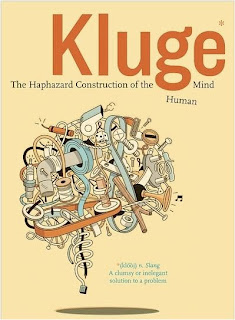 I won't say that this book changed my life so much as it confirmed it. It confirmed many of the ideas and theories I already had about human behavior and the nature of the universe. (Fittingly, "confirmation bias" is one of the the forces at work in our brains that the book reaffirms.)
Citing study after study after study after study, Marcus shows how people make decisions based on irrelevant factors. We are not necessarily rational, even when we are deliberative. He chalks this up to the klugey way that our brains evolved. "We are just not born to reason in balanced ways," he writes.
There is way too much good stuff in the book to process out here on my blog, so I will just present Marcus' 13 "suggestions" to deal with our imperfect brains. Many of these suggestions correspond with my own Timicist principles. I'll call them my 13 Kluge Commandments-- with the caveat that they're not really commandments-- because I like the reference to that other religion and the [K]-sound alliteration.
The 13 Kluge Commandments (excerpted directly from Kluge, pgs. 165-172.)
Well, sort of. The whole concept of a Bible is antithetical to Timicism, since no one book, person, or source can be the ultimate authority. But if Timicism had a Bible, its current incarnation would be a book written by Psychology professor Gary Marcus titled Kluge: The Haphazard Construction of the Human Mind.
 I won't say that this book changed my life so much as it confirmed it. It confirmed many of the ideas and theories I already had about human behavior and the nature of the universe. (Fittingly, "confirmation bias" is one of the the forces at work in our brains that the book reaffirms.)
Citing study after study after study after study, Marcus shows how people make decisions based on irrelevant factors. We are not necessarily rational, even when we are deliberative. He chalks this up to the klugey way that our brains evolved. "We are just not born to reason in balanced ways," he writes.
There is way too much good stuff in the book to process out here on my blog, so I will just present Marcus' 13 "suggestions" to deal with our imperfect brains. Many of these suggestions correspond with my own Timicist principles. I'll call them my 13 Kluge Commandments-- with the caveat that they're not really commandments-- because I like the reference to that other religion and the [K]-sound alliteration.
The 13 Kluge Commandments (excerpted directly from Kluge, pgs. 165-172.)
- Whenever possible, consider alternative hypotheses.
- Reframe the question.
- Always remember that correlation does not entail causation.
- Never forget the size of your sample.
- Anticipate your own impulsivity and pre-commit.
- Don't just set goals. Make contingency plans.
- Whenever possible, don't make important decisions when you are tired or have other things on your mind. [This one deserves an asterisk.]
- Always weigh benefits against costs.
- Imagine that your decisions may be spot-checked.
- Distance yourself.
- Beware the vivid, the personal, and the anecdotal.
- Pick your spots.
- Try to be rational.
Monday, May 10, 2010
Things That Are Doing It
Let me preface this completely juvenile post with the following insight: Human beings are pattern-seeking animals. Organizing non-identical shapes into patterns and symbols helps us to speak, understand, read, and write. It helped our ancestors to identify dangers in the wild.
This propensity for pattern-seeking has some interesting side effects, though, like when we see a family of ducklings in a cloud or a pineapple in a Rorschach test. Some times it gets downright wacky, and people who think about Jesus all day become convinced they've seen him in a pancake.
With that in mind, here's a website I stumbled upon recently: Things That Are Doing It.

The site has all kinds of fun pictures that, if you are a 12-year-old boy like me, you think are dirty. Some of them are not in any way intended to be dirty, but if you have "doing it" on the brain, you start seeing it everywhere. Like, for example, this Russian graph:
 Oh, yeah, that blue line totally wants it bad.
There are a whole lot of pics of everyday things that resemble naughty bits:

 Some of them are obviously designed to be dirty:
 And some of them, it's just puzzling what the hell they were intended to be:

My favorites are the unintentionally inappropriate ones:

And my very favorite one of all? Jesus "enlightens" the little children:

It's really hard to fathom how the designer of this light switch could have been so naive. I have to believe it was someone so blissfully awash in thoughts of The Lord that they couldn't conceive of Jesus even having a penis, much less sharing it with the beautiful children. Someone who lived in a world far, far removed from priest molestation scandals, or things that do it in public.
This propensity for pattern-seeking has some interesting side effects, though, like when we see a family of ducklings in a cloud or a pineapple in a Rorschach test. Some times it gets downright wacky, and people who think about Jesus all day become convinced they've seen him in a pancake.
With that in mind, here's a website I stumbled upon recently: Things That Are Doing It.

The site has all kinds of fun pictures that, if you are a 12-year-old boy like me, you think are dirty. Some of them are not in any way intended to be dirty, but if you have "doing it" on the brain, you start seeing it everywhere. Like, for example, this Russian graph:
 Oh, yeah, that blue line totally wants it bad.
There are a whole lot of pics of everyday things that resemble naughty bits:

 Some of them are obviously designed to be dirty:
 And some of them, it's just puzzling what the hell they were intended to be:
My favorites are the unintentionally inappropriate ones:

And my very favorite one of all? Jesus "enlightens" the little children:

It's really hard to fathom how the designer of this light switch could have been so naive. I have to believe it was someone so blissfully awash in thoughts of The Lord that they couldn't conceive of Jesus even having a penis, much less sharing it with the beautiful children. Someone who lived in a world far, far removed from priest molestation scandals, or things that do it in public.
Tuesday, May 4, 2010
Yay, Evolution
The official Timicist position on evolution can be read at the Timblog here: http://tim4814.blogspot.com/2010/04/yay-evolution.html.
Monday, April 5, 2010
April Honest Day
New Timicist Holiday:
April 5: April Honest Day
In response to that other April holiday where people take great joy in lying to, and making fools of, the people they love, this is a holiday dedicated to NOT making up stupid shit.
On this day you are encouraged to tell the truth, the whole truth, and nothing but the truth.
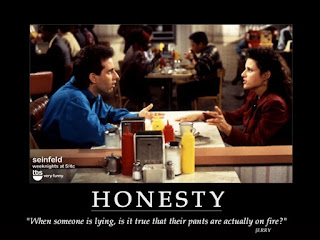
For more background on this holiday, see this Timblog post.
April 5: April Honest Day
In response to that other April holiday where people take great joy in lying to, and making fools of, the people they love, this is a holiday dedicated to NOT making up stupid shit.
On this day you are encouraged to tell the truth, the whole truth, and nothing but the truth.

For more background on this holiday, see this Timblog post.
Subscribe to:
Comments (Atom)
